
Materials & Technology
Double Wall Vacuum Insulation Explained: How Stainless Steel Bottles Are Made
Dec
Why Vacuum Bottles Dominate the Stainless Steel Bottle Market
Over the past decade, stainless steel vacuum bottles have become one of the fastest-growing product categories in the global drinkware market. From outdoor sports bottles and travel tumblers to premium coffee flasks and corporate gifts, double wall vacuum bottles are now the preferred choice for consumers who demand durability, safety, and superior temperature retention.
For brands and wholesalers, understanding how stainless steel bottles are made—especially the double wall vacuum insulation process—is critical when selecting reliable OEM bottles or launching customized bottles under a private label. Product performance, cost structure, quality stability, and long-term brand reputation all depend on manufacturing expertise.
This article explains, step by step, how vacuum bottles are designed and produced, why double wall vacuum insulation works so effectively, and what B2B buyers should know before sourcing OEM stainless steel bottles from a factory.
What Is Double Wall Vacuum Insulation in Stainless Steel Bottles?
Basic Structure of Double Wall Stainless Steel Bottles
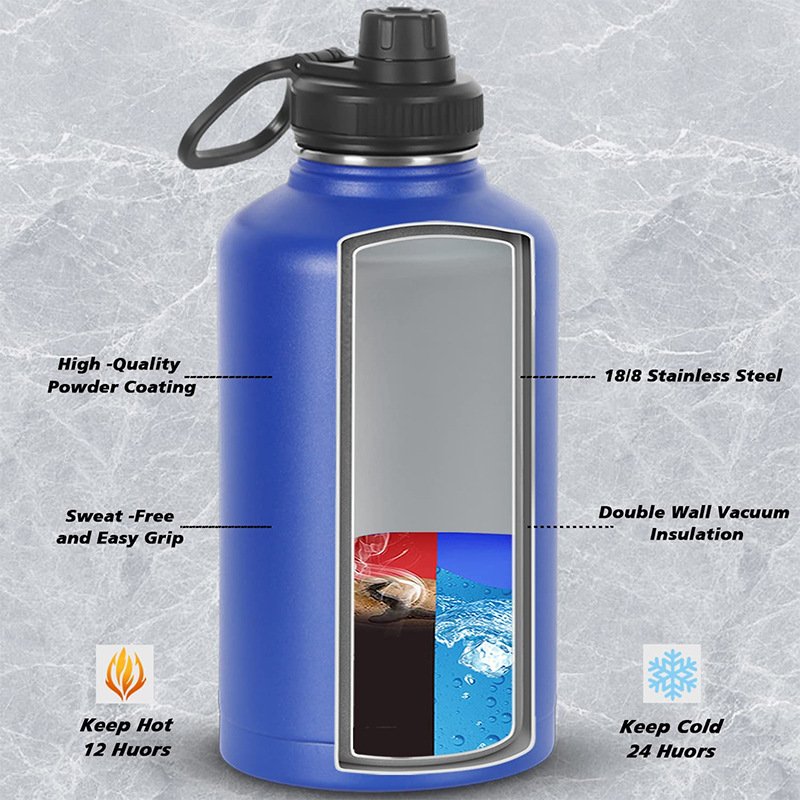
A double wall stainless steel bottle consists of two separate layers:
- Inner wall: Holds the beverage and is made from food-grade stainless steel
- Outer wall: Forms the exterior shell and protects the bottle
Between these two walls is a vacuum-sealed space, which is the core of the insulation system. Unlike foam or air-filled insulation, a vacuum contains no air molecules, dramatically reducing heat transfer.
This construction is what differentiates vacuum bottles from single wall stainless steel bottles.
How Vacuum Insulation Reduces Heat Transfer
Heat normally transfers in three ways:
- Conduction – direct contact between materials
- Convection – movement of air or liquid
- Radiation – heat emitted from a hot surface
Double wall vacuum insulation minimizes all three:
- The vacuum eliminates convection
- Stainless steel walls reduce conduction
- Inner wall polishing helps reflect radiant heat
As a result, high-quality vacuum bottles can keep drinks hot for 12–24 hours and cold for up to 24–48 hours, depending on design and capacity.
Single Wall vs Double Wall Vacuum Bottles
| Feature | Single Wall Bottles | Double Wall Vacuum Bottles |
|---|---|---|
| Insulation | None | Excellent |
| Condensation | Yes | No |
| Heat Retention | Poor | Long-lasting |
| Use Case | Short-term hydration | Travel, outdoor, premium use |
For OEM buyers targeting mid-to-high-end markets, double wall vacuum bottles are the clear winner.
Materials Used in Vacuum Bottles Manufacturing
Why 304 & 316 Stainless Steel Are Industry Standards
Most premium stainless steel bottles use:
- SUS 304 stainless steel – food-safe, corrosion-resistant, cost-effective
- SUS 316 stainless steel – higher corrosion resistance, ideal for salty or acidic liquids
Both materials comply with FDA, LFGB, and EU food-contact regulations, making them suitable for international markets.
Inner Liner vs Outer Shell Material Selection
- Inner liner: Requires higher purity, smoother finish, and precise thickness
- Outer shell: Focuses more on strength, appearance, and coating compatibility
Material thickness directly affects weight, insulation efficiency, and cost—key considerations in OEM bottle development.
BPA-Free Lids, Silicone Seals, and Accessories
Vacuum performance also depends on supporting components:
- BPA-free PP or Tritan lids
- Food-grade silicone sealing rings
- Leak-proof spout or straw systems
Poor lid design can compromise insulation, regardless of bottle quality.
Step-by-Step Manufacturing Process of Stainless Steel Vacuum Bottles
Stainless Steel Cutting and Deep Drawing
Manufacturing begins with stainless steel sheets that are:
- Cut into precise blanks
- Deep drawn into bottle shapes using hydraulic presses
Inner and outer bodies are formed separately to ensure accuracy.
Welding Process for Double Wall Bottles
The inner and outer shells are joined at the bottle mouth using laser welding or high-precision TIG welding.
Laser welding is preferred for OEM bottles because it provides:
- Stronger welds
- Minimal heat distortion
- Higher consistency in mass production
Vacuum Extraction and Sealing Technology
This is the most critical stage in vacuum bottle manufacturing.
- Air between the two walls is extracted using vacuum pumps
- The vacuum port is sealed immediately
- Insulation performance depends on vacuum stability
Even a microscopic leak can reduce thermal performance, which is why factory experience is essential.
Annealing, Polishing, and Surface Treatment
After vacuum sealing, bottles undergo:
- Annealing to release internal stress
- Mechanical or electrolytic polishing for smoothness
- Cleaning to remove residues
These steps ensure structural stability and a premium finish.
Surface Finishing Options for OEM Bottles
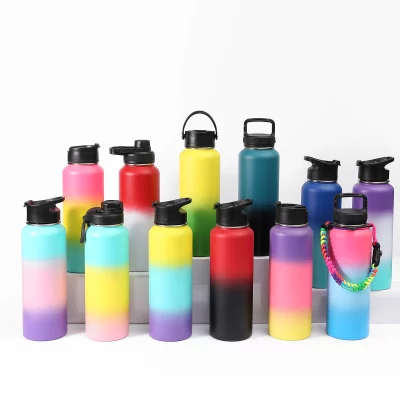
Powder Coating, Spray Painting, and Brushed Finish
Common exterior finishes include:
- Powder coating – durable, scratch-resistant, eco-friendly
- Spray painting – flexible colors, lower cost
- Brushed stainless steel – classic, premium appearance
Choice depends on brand positioning and target market.
Custom Colors and Pantone Matching for Customized Bottles
OEM manufacturers can match Pantone colors precisely, allowing brands to maintain visual consistency across product lines.
Matte, glossy, metallic, and textured finishes are all possible.
Logo Application Methods
Popular branding techniques include:
- Laser engraving (permanent and premium)
- Screen printing
- Heat transfer printing
Laser logos are especially favored for customized bottles targeting corporate and promotional markets.
Quality Control in Vacuum Bottle Production
Vacuum Leak Testing and Insulation Performance Testing
Each batch undergoes:
- Vacuum integrity testing
- Hot and cold retention tests (6h / 12h / 24h benchmarks)
Reliable OEM factories test every bottle, not just samples.
Food Safety and Material Compliance
Quality manufacturers provide:
- FDA / LFGB reports
- BPA-free certifications
- Heavy metal migration tests
This is crucial for importers entering EU or North American markets.
Drop Tests and Durability Checks for Wholesale Orders
Vacuum bottles are tested for:
- Drop resistance
- Lid sealing under pressure
- Coating adhesion
Durability directly affects return rates and brand reputation.
OEM & Customized Stainless Steel Bottles: What Buyers Should Know
OEM Bottles vs ODM Bottles Explained
- OEM bottles: Produced to buyer’s design and specifications
- ODM bottles: Based on factory designs with customization options
OEM is ideal for strong brands, while ODM suits fast market entry.
Customization Options Available from Manufacturers
Customization can include:
- Bottle shape and capacity
- Lid structure
- Surface finish and logo
- Retail packaging
The right factory offers flexibility without sacrificing quality.
MOQ, Lead Time, and Cost Factors in OEM Vacuum Bottles
Typical considerations:
- MOQ: 1,000–3,000 units per model
- Lead time: 25–45 days
- Costs influenced by material, coating, and testing standards
Transparent pricing is a sign of a trustworthy supplier.
Popular Applications of Double Wall Vacuum Bottles
Sports, Outdoor, and Fitness Stainless Steel Bottles
Large-capacity bottles with carry handles dominate this segment.
Travel, Coffee, and Daily Use Vacuum Bottles
Leak-proof lids and cup-holder-friendly designs are key.
Promotional and Corporate Gift Customized Bottles
Laser logos and premium packaging increase perceived value.
How to Choose the Right Vacuum Bottle Manufacturer
Factory Capabilities and Production Capacity
Look for factories with:
- In-house vacuum sealing
- Automated welding lines
- Consistent monthly output
Quality Assurance vs Low-Cost Risks
Extremely low prices often mean:
- Weak vacuum retention
- Inconsistent materials
- Higher defect rates
Long-term cooperation favors stable quality over short-term savings.
Communication, Sampling, and After-Sales Support
Professional OEM partners provide:
- Fast sampling
- Clear documentation
- Reliable after-sales service
Future Trends in Stainless Steel Vacuum Bottles
- Lighter-weight structures
- Larger capacity bottles (40oz+, 64oz)
- Sustainable coatings and packaging
- Functional lids and modular accessories
Factories that invest in R&D stay ahead of market trends.
Why Choose Our Factory – Your Trusted OEM Stainless Steel Bottle Partner
As a professional stainless steel bottle manufacturer, we specialize in double wall vacuum bottles, OEM bottles, and customized bottles for global brands and wholesalers.
Why work with us?
- ✔️ Over X years of manufacturing experience in vacuum bottles
- ✔️ Full OEM & ODM customization support
- ✔️ Strict quality control and vacuum testing on every batch
- ✔️ Compliance with FDA, LFGB, and EU standards
- ✔️ Competitive factory-direct pricing with stable lead times
- ✔️ Dedicated B2B support from sampling to mass production
Whether you are launching a new brand or expanding your existing product line, we help you turn concepts into high-quality stainless steel vacuum bottles that sell.
📩 Contact us today to request samples, discuss customization options, or receive a competitive OEM quotation.
Frequently Asked Questions About Stainless Steel Vacuum Bottles
How long can double wall vacuum bottles keep drinks hot or cold?
Typically 12–24 hours for hot drinks and up to 48 hours for cold beverages.
Are stainless steel vacuum bottles safe for daily use?
Yes, when made with food-grade stainless steel and BPA-free components.
What is the difference between OEM bottles and customized bottles?
OEM bottles are produced to your specifications; customized bottles include logos, colors, and packaging.
How do manufacturers test vacuum insulation quality?
Through vacuum leak detection and hot/cold retention testing.
What is the typical MOQ for OEM stainless steel bottles?
Usually between 1,000 and 3,000 units, depending on customization.
