
Buying Guide
How to Stock Stainless Steel Tumblers for Wholesale Business
Dec
Introduction: Why Stainless Steel Tumblers Are a Wholesale Essential
Stainless steel tumblers have become one of the most reliable and profitable product categories in the global drinkware market. From coffee tumblers and insulated water bottles to large-capacity handled tumblers, demand continues to rise across North America, Europe, Australia, and emerging markets.
For wholesale importers, however, success is not just about buying tumblers—it’s about stocking the right stainless steel tumblers, in the right styles, capacities, and price tiers, while managing risk, inventory turnover, and branding flexibility.
This guide explains how to stock stainless steel tumblers strategically for wholesale business, based on real factory-level production data, global sales trends, and importer purchasing behavior. Whether you supply retailers, e-commerce sellers, corporate buyers, or promotional markets, this article will help you build a high-converting, scalable tumbler inventory—including how and when to leverage OEM bottles for long-term growth.
Understand Your Wholesale Customer Before You Stock
Before choosing products, wholesale importers must clearly define who they are selling to.
Different downstream buyers require different tumbler strategies:
- Retail chains → stable SKUs, proven designs, consistent supply
- Amazon / online sellers → trending styles, competitive pricing, fast replenishment
- Corporate & promotional buyers → customization, logo printing, gift packaging
- Brand owners → OEM bottles with exclusive designs and colors
Key takeaway:
Your inventory strategy should match your customer type, not personal preference.
Choose the Right Core Tumbler Categories
A healthy wholesale tumbler portfolio should be built around high-demand core categories, supported by seasonal or trend-driven SKUs.
Best-Selling Stainless Steel Tumbler Types
Based on factory shipment data and importer reorder rates, these categories consistently perform well:
- Vacuum insulated tumblers (20–30 oz)
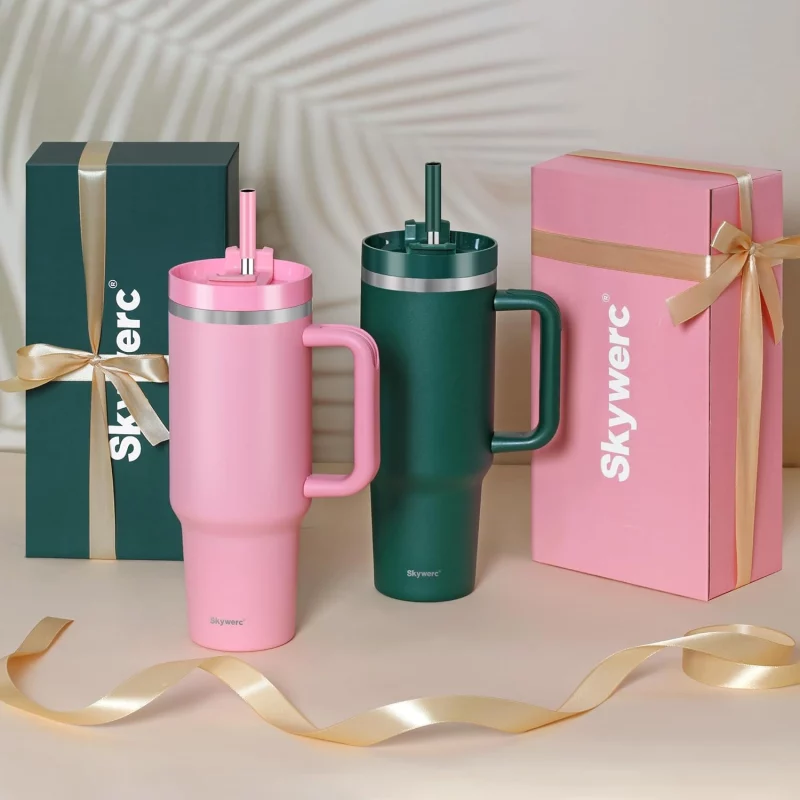
- 40 oz handled tumblers with straw lids
- Travel coffee tumblers with flip or sliding lids
- Slim tumblers (for gifting and promotions)
- Sports tumblers / shaker bottles
These products offer:
- Broad consumer appeal
- Stable year-round demand
- Easy compatibility with OEM bottles customization
Capacity Strategy: Don’t Overstock the Wrong Sizes
One of the most common wholesale mistakes is over-investing in niche sizes.
Recommended Wholesale Capacity Mix
- 20–24 oz → daily coffee & office use (high turnover)
- 30–32 oz → travel & outdoor use
- 40 oz → trend-driven, high ticket, strong branding potential
Avoid stocking too many uncommon sizes (e.g. 18 oz or 50 oz) unless requested by specific buyers.
Factory insight:
40 oz tumblers generate higher order values, but 20–30 oz tumblers generate faster repeat orders.
Material & Insulation: What Wholesale Buyers Expect
Your customers may not understand stainless steel grades—but their customers do feel the difference.
Minimum Wholesale Standards
- 304 stainless steel (18/8) interior
- Double-wall vacuum insulation
- Heat retention: 6–12 hours hot, 12–24 hours cold
- BPA-free lids
If you are sourcing OEM bottles, material consistency is critical to avoid quality disputes and returns.
Tip:
Always request factory test reports or sample testing before mass stocking.
Lid Systems Matter More Than You Think
From a factory standpoint, lid complaints are the #1 cause of after-sales issues.
Best Wholesale-Safe Lid Options
- Sliding lids (low defect rate)
- Flip-top lids with silicone seals
- Straw lids with leak-resistant valves
Avoid experimental or overly complex lids unless they are tested at scale.
For OEM bottles, stick to proven lid platforms and customize colors rather than structures.
Color Strategy: Balance Trends with Safe Inventory
Color selection can either accelerate or slow inventory turnover.
Recommended Color Mix for Wholesale Stock
- 60–70% neutral colors:
- Black
- White
- Stainless steel silver
- Navy
- 20–30% trending colors:
- Pastels
- Earth tones
- Seasonal colors
- 10% OEM custom colors:
- Brand-specific Pantone colors
- Retail exclusives
Neutral colors sell year-round. Trend colors boost margins. OEM bottles create differentiation and long-term client retention.
OEM Bottles: When Wholesale Importers Should Invest
Many importers start with ready-made products—but OEM bottles are the next step toward scalability.
Benefits of OEM Bottles for Wholesale Business
- Exclusive designs (avoid price wars)
- Custom colors & finishes
- Logo printing & packaging
- Higher profit margins
- Stronger customer loyalty
When OEM Makes Sense
- You already have stable repeat buyers
- You want to protect your market from competitors
- You supply brand owners or large retailers
Factory advice:
Start OEM with existing molds + custom colors before investing in new tooling.
MOQ Planning: Reduce Risk, Increase Flexibility
MOQ (Minimum Order Quantity) is one of the biggest concerns for wholesale importers.
Smart MOQ Strategy
- Stock standard SKUs at lower MOQ
- Use OEM bottles for confirmed orders
- Combine colors or lids to meet factory MOQ
- Negotiate phased production with reliable manufacturers
Factories are more flexible with OEM bottles when they see long-term cooperation potential.
Pricing Structure: Build a Tiered Wholesale Model
Avoid a single-price strategy.
Suggested Wholesale Pricing Tiers
- Entry-level tumblers → price-driven buyers
- Mid-range insulated tumblers → best volume
- OEM bottles / private label → high-margin
This allows you to:
- Serve different buyer types
- Increase average order value
- Upsell OEM solutions naturally
Packaging Choices That Impact Sales
Wholesale buyers increasingly care about packaging.
Popular Wholesale Packaging Options
- Bulk packaging (lowest cost)
- Individual white boxes
- Custom printed gift boxes (for OEM bottles)
If you serve promotional or corporate markets, packaging can be a deciding factor.
Compliance & Certification: Don’t Skip This Step
Importers must ensure compliance with destination markets:
- FDA / LFGB food contact standards
- BPA-free certification
- Dishwasher safety claims (if applicable)
For OEM bottles, compliance documentation should match final branding, not generic samples.
Inventory Turnover Strategy for Tumblers
Stainless steel tumblers should not sit in warehouses for months.
Best Practices
- Track sales by size & color
- Reorder fast-moving SKUs monthly
- Clear slow stock with bundle deals
- Use OEM bottles only for committed orders
Fast turnover = healthier cash flow.
Why Sourcing Directly from a Factory Matters
Many wholesale importers transition from traders to factories once volume increases.
Factory Advantages
- Better cost control
- Customization flexibility
- Stable quality
- OEM bottle development support
- Faster problem resolution
A reliable factory partner becomes part of your supply chain strategy, not just a vendor.
Conclusion: Stock Smarter, Not Bigger
Stocking stainless steel tumblers for wholesale business is about strategy, balance, and foresight.
Successful importers:
- Focus on proven core SKUs
- Control risk with smart capacity and color planning
- Gradually introduce OEM bottles
- Partner with experienced manufacturers
By combining standard tumblers for cash flow with OEM bottles for differentiation, wholesale importers can build a scalable, profitable drinkware business that stands out in an increasingly competitive market.
