
Trends & Insights
Wholesale Insulated Half Gallon Water Jug Manufacturers: The Ultimate Guide for Bulk Buyers (2026)
Mar
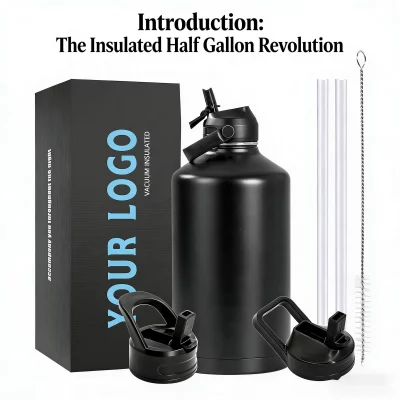
Introduction: The Insulated Half Gallon Revolution
The hydration market has evolved. While standard half gallon jugs satisfied the basic need for volume, today’s discerning consumers demand temperature retention alongside capacity. Enter the insulated half gallon water jug—a product category that has transformed from niche outdoor gear to mainstream essential.
For B2B buyers, this shift represents a premium opportunity. Corporate wellness programs, fitness brands, outdoor retailers, and promotional distributors are seeking high-performance insulated jugs that keep water ice-cold for 24 hours or piping hot for 12. These aren’t simple containers—they’re engineering achievements that command higher price points and deliver superior brand visibility.
This guide is designed specifically for procurement professionals, business owners, and bulk buyers navigating the insulated half gallon water jug market in 2026. We’ll explore what separates commodity suppliers from strategic manufacturing partners, how vacuum insulation technology actually works, and what questions to ask before placing your next bulk order.
Section 1: Why Insulated Half Gallon Jugs Dominate the 2026 Premium Hydration Market
The Temperature Retention Imperative
Today’s consumers expect more from their hydration vessels. The standard half gallon jug kept water at room temperature—acceptable for desk use but inadequate for the gym, outdoor adventures, or all-day hydration in varying environments.
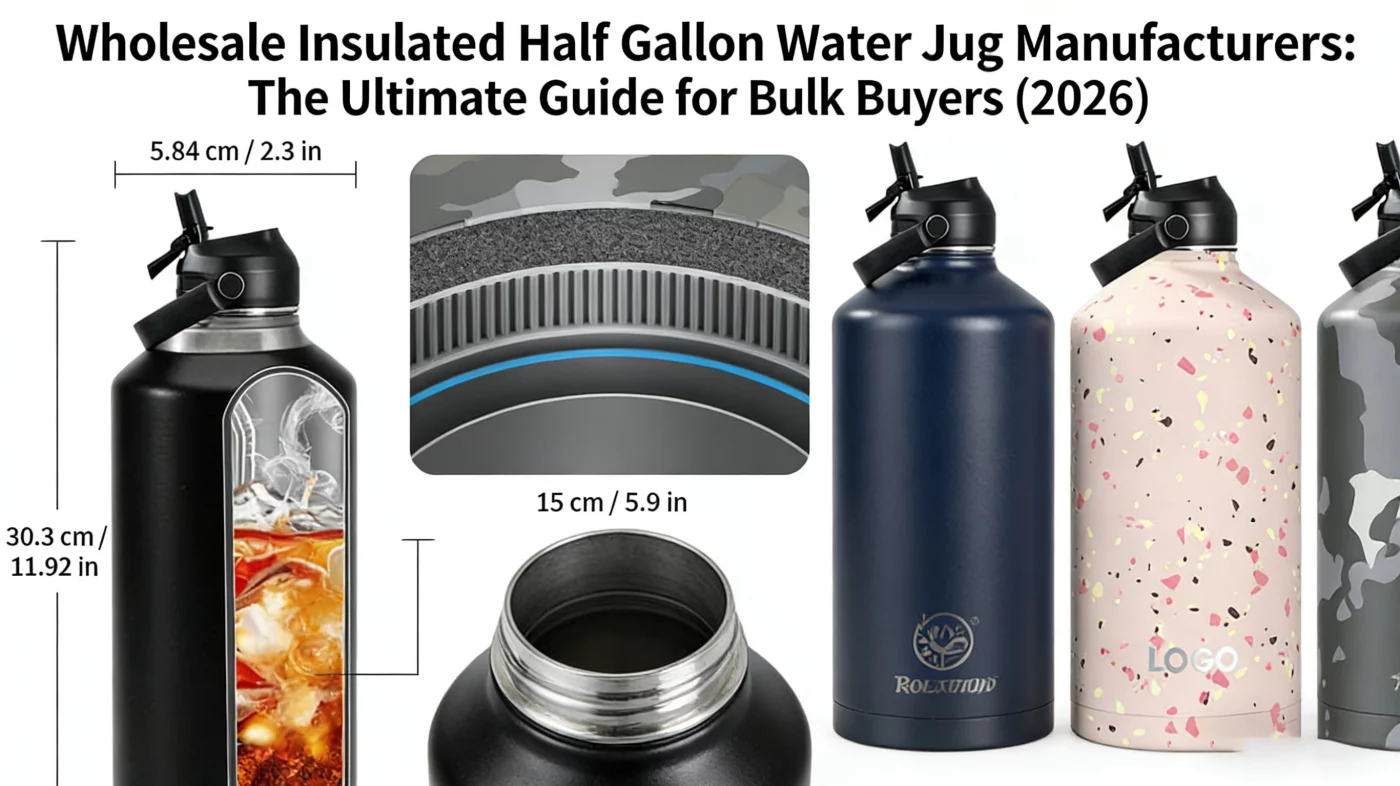
Insulated jugs solve this fundamental limitation through vacuum insulation technology. By creating a vacuum-sealed layer between inner and outer walls, these jugs eliminate conductive and convective heat transfer, keeping beverages cold for up to 24 hours or hot for up to 12 hours.
For end users, this means:
-
Gym-goers enjoy ice-cold water throughout intense workouts
-
Outdoor enthusiasts maintain beverage temperature during multi-hour adventures
-
Office workers keep morning coffee hot until afternoon
-
Parents pack cold milk for children’s all-day activities
The market has responded enthusiastically. Global e-commerce for insulated water bottles and jugs is projected to rise 11%+ year-over-year from 2025 to 2026, with North America and Europe leading demand for high-performance variations -1.
The B2B Opportunity: Premium Positioning
For bulk buyers, insulated jugs offer something standard jugs cannot: premium pricing power.
| Metric | Standard Half Gallon Jug | Insulated Half Gallon Jug |
|---|---|---|
| Average Retail Price | $15–$25 | $35–$60 |
| Wholesale Price Range | $4–$8 | $12–$25 |
| Perceived Value | Commodity | Premium Investment |
| Brand Association | Basic Utility | Performance/Quality |
| Customer Retention | Moderate | High (due to investment) |
When you source insulated jugs for corporate programs or retail distribution, you’re not just supplying a container—you’re delivering a performance solution that reflects positively on your brand.
The $12 Billion Corporate Wellness Connection
The corporate wellness sector, now valued at over $12 billion, has embraced premium hydration initiatives as tangible touchpoints for employer branding -1. Companies recognize that wellness programs must extend beyond posters and emails to include high-quality items that employees actually use and value.
Insulated half gallon jugs with company logos serve this purpose perfectly. They’re practical, promote health, and generate repeated brand impressions throughout the day. More importantly, their premium nature signals that the employer invests in quality—a subtle but powerful message about company values.
Section 2: Understanding Insulation Technology—What Bulk Buyers Must Know
2.1 The Science of Vacuum Insulation
At its core, vacuum insulation is elegantly simple yet technically demanding to manufacture correctly.
How it works:
-
Two stainless steel walls are created—an inner wall containing the beverage and an outer wall forming the exterior
-
The air between these walls is evacuated, creating a vacuum
-
Without air molecules, heat cannot transfer via conduction or convection
-
A thin copper layer is often added to inner surfaces to reflect radiant heat back into the beverage
What this means for quality:
-
The strength of the vacuum determines insulation performance
-
Vacuum integrity must be maintained for years—any leak compromises performance
-
Welding quality at seams is critical; poor welds create failure points
-
Copper lining quality affects heat reflection efficiency
2.2 Material Matters: 18/8 Stainless Steel vs. Alternatives
The foundation of any quality insulated jug is its material composition. While “stainless steel” has become a generic term, sophisticated buyers understand significant variations exist.
18/8 (304) Stainless Steel has emerged as the industry gold standard for premium insulated jugs. This food-grade alloy contains 18% chromium and 8% nickel, offering:
-
Superior corrosion resistance
-
Excellent durability and impact resistance
-
No metallic taste transfer
-
Complete recyclability
-
Compliance with FDA and LFGB food contact regulations
18/10 (316) Stainless Steel represents the premium tier, adding molybdenum for enhanced corrosion resistance—ideal for marine environments or highly acidic beverages. However, the cost premium rarely justifies the upgrade for standard hydration applications.
Lower-Grade Steels (200 series) reduce costs but introduce risks:
-
Reduced corrosion resistance
-
Potential metallic taste issues
-
Lower durability
-
Inconsistent quality across production runs
For B2B buyers, insisting on 18/8 stainless steel certification protects your program’s reputation and eliminates the most common consumer complaints about taste and durability.
2.3 Compliance and Certification: The Non-Negotiables
For bulk buyers, regulatory compliance isn’t optional—it’s the price of market access. Insulated jugs face additional scrutiny due to their metal construction and potential for heavy metal leaching.
Top manufacturers provide transparent documentation of third-party certifications including:
-
FDA (U.S. Food and Drug Administration) compliance for food contact materials—critical for U.S. market access
-
LFGB (German Food and Commodities Act) certification for European markets—often more stringent than FDA
-
Proposition 65 compliance for California distribution—essential for nationwide U.S. programs
-
ISO 9001 quality management certification
-
ISO 14001 environmental management certification
Ask potential suppliers for test reports from accredited laboratories verifying:
-
No heavy metal migration (lead, cadmium, mercury)
-
No BPA (relevant for any plastic components like lids)
-
Food-grade silicone certification for seals
Reputable manufacturers maintain these documents and share them readily with qualified buyers.
2.4 The Critical Components Beyond Steel
An insulated jug is more than its stainless steel body. Quality depends on every component:
Lid Design and Sealing: The lid is the most common failure point. Premium jugs feature:
-
Multi-component lids with separate sealing systems
-
High-quality silicone gaskets that maintain elasticity
-
Thread designs that create compression seals
-
Venting mechanisms to prevent vacuum lock
Copper or Aluminum Lining: Some manufacturers add copper or aluminum layers to the inner wall’s exterior surface to reflect radiant heat. The quality and application method of this layer directly impacts thermal performance.
Exterior Finish: Powder coating, painting, or electro-polishing affects both aesthetics and durability. High-quality finishes resist chipping, scratching, and corrosion through years of use.
Section 3: Customization Capabilities—From Logo to Full Brand Integration
The ability to transform a standard insulated jug into a branded asset separates commodity suppliers from strategic partners. Insulated jugs present unique customization challenges due to their curved surfaces and durable finishes.
3.1 Decoration Methods for Insulated Jugs
Laser Engraving: The gold standard for stainless steel jugs. Lasers remove the outer finish or etch the steel itself, creating permanent branding that:
-
Survives hundreds of dishwasher cycles
-
Won’t peel, fade, or chip
-
Creates a premium, subtle appearance
-
Works perfectly on powder-coated or bare steel surfaces
Pad Printing: Cost-effective for simple logos and text on curved surfaces. Works well for lid branding or secondary logos but may wear over time with heavy use.
UV Printing: Advanced digital printing technology that chemically bonds inks with specially treated surfaces. Modern UV printing on stainless steel can achieve:
-
Full-color designs and gradients
-
Photographic elements
-
Durability through 500+ dishwasher cycles when properly cured
Color Matching: Critical for brand consistency. Quality manufacturers use spectrophotometer verification to ensure color accuracy within ΔE < 1.5 tolerance across entire production runs. For insulated jugs, this means matching powder coat colors to your brand guidelines precisely.
3.2 The Customization Checklist
When evaluating a manufacturer’s customization capabilities, ask:
-
What decoration methods do you offer for stainless steel insulated jugs?
-
What is your minimum order quantity for custom colors versus stock colors?
-
Do you charge setup fees for Pantone matching?
-
What is the lead time for custom print proofs?
-
Can you provide samples showing your printing quality on actual production units?
-
How do you ensure color consistency across multi-thousand unit runs?
-
What is your defect tolerance for decoration placement and registration?
-
Do you offer different decoration methods for the body versus the lid?
Section 4: The Manufacturing Process—What Bulk Buyers Need to Know
Understanding how insulated half gallon water jugs are manufactured helps buyers evaluate supplier capabilities and identify potential quality issues before they become problems.
4.1 The Insulation Core: Vacuum Sealing
The defining characteristic of an insulated jug—the vacuum between its walls—is created through a precise manufacturing process:
-
Tube Forming: Inner and outer stainless steel tubes are formed separately
-
Bottom Welding: The bottom of each tube is welded closed
-
Neck Reduction: The top opening is formed to final dimensions
-
Inner/Outer Assembly: The inner container is placed inside the outer container
-
Copper Application: Copper layer is applied to the inner container’s exterior
-
Vacuum Creation: The assembly is heated while air is evacuated from between the walls
-
Sealing: The evacuation port is sealed, locking the vacuum in place
-
Finishing: Exterior polishing, coating, or powder coating
What this means for quality:
-
The vacuum sealing process requires specialized equipment—not all manufacturers possess this capability
-
The quality of welds at the bottom and neck determines long-term vacuum integrity
-
Copper layer application consistency affects thermal performance
-
Final sealing must be perfect; micro-leaks destroy insulation
4.2 Quality Control Protocols
Reputable manufacturers implement multiple quality checkpoints specific to insulated products:
Vacuum Integrity Testing: Every unit should be tested for vacuum retention. This is typically done using:
-
Induction coil testing that detects vacuum presence
-
Thermal imaging to verify insulation performance
-
Pressure decay testing for sealed systems
Leak Testing: Lids and sealing surfaces undergo pressure testing to verify leak-proof performance—critical for half gallon jugs where leaks create significant customer dissatisfaction.
Durability Testing: Samples from each production batch undergo:
-
Drop testing from typical use heights
-
Dishwasher cycle testing
-
Thermal shock testing (extreme temperature changes)
-
Long-term vacuum retention monitoring
Pre-Shipment Inspection: Before bulk orders ship, qualified inspectors verify:
-
Sample products against approved samples
-
Decoration placement and color accuracy
-
Packaging integrity
-
Labeling and documentation
-
Random vacuum testing from production units
Many buyers now mandate third-party inspections (DPI, FRI) for large orders to ensure independent verification.
Section 5: Strategic Sourcing—Factory Direct Advantages
5.1 The Factory Direct Imperative
For insulated half gallon water jugs, factory-direct sourcing isn’t just cost-effective—it’s essential for quality assurance.
Why factory direct matters for insulated products:
Technical Expertise: Insulated jug manufacturing requires specialized knowledge of vacuum technology, welding, and material science. Trading companies lack this deep understanding and cannot effectively evaluate manufacturer capabilities.
Quality Traceability: When quality issues arise—and with complex insulated products, they sometimes do—direct communication with the factory enables faster diagnosis and resolution. Trading companies introduce communication delays and information loss.
Customization Flexibility: Insulated jug customization often requires coordination between decoration teams and production teams. Factory-direct relationships enable seamless integration.
Cost Structure: Without intermediary markups, factory-direct pricing is typically 20-40% lower than trading company quotes for identical specifications. For insulated jugs with higher base costs, this margin difference significantly impacts program profitability.
5.2 Minimum Order Quantities (MOQs)
MOQ requirements vary significantly between suppliers for insulated products:
| Sourcing Channel | Typical MOQ Range | Best For |
|---|---|---|
| Factory Direct (Stock Colors) | 500-1000 units | Pilot programs, testing market response |
| Factory Direct (Custom Colors) | 2000-3000 units | Established programs, brand launches |
| Full Custom Development | 3000-5000 units | Major brand initiatives, exclusive designs |
| Custom Laser Engraving Only | 100-300 units | Small programs, premium gifts |
The key is matching your volume requirements with suppliers whose MOQ structure aligns with your program scale.
5.3 Lead Time Planning
Insulated jug production requires longer lead times than standard plastic bottles due to the complexity of vacuum insulation:
-
Sample Development: 15-30 days for custom samples
-
Production Time: 30-45 days for typical orders
-
Ocean Freight: 25-40 days to Western markets
-
Total Lead Time: 70-115 days from order to delivery
Smart buyers plan 4-6 months ahead for major programs, especially those tied to specific seasons or events.
Section 6: The Bulk Buyer’s Decision Framework
6.1 Step One: Define Your Requirements
Before contacting suppliers, document:
Volume Requirements:
-
Initial order quantity
-
Projected annual volume
-
Growth expectations
Product Specifications:
-
Target capacity (half gallon = 64 oz / 1.9 L)
-
Desired mouth opening (wide mouth vs. standard)
-
Handle requirements
-
Lid type (flip-top, screw-top, straw lid)
-
Color requirements
-
Finish type (powder coated, painted, brushed, polished)
Customization Needs:
-
Logo placement and size
-
Decoration method preference
-
Color matching requirements
-
Special packaging needs
Quality Standards:
-
Required certifications
-
Defect tolerance levels
-
Inspection requirements
Timeline:
-
Sample approval deadline
-
Production completion date
-
In-hands date
Budget Parameters:
-
Target unit cost
-
Total program investment
-
Payment terms preference
6.2 Step Two: Evaluate Supplier Capabilities
Use this checklist when assessing potential manufacturers:
Product Quality
-
Material certifications (18/8 stainless steel verification)
-
Sample quality and consistency
-
Vacuum integrity testing protocols
-
Leak-proof testing
-
Thermal performance data
Customization Expertise
-
Decoration methods available
-
Pantone color matching capability
-
Setup fees and artwork requirements
-
Previous work examples with photos
Production Capacity
-
Monthly production capacity for insulated jugs
-
Peak season availability
-
Backup production lines
-
Raw material inventory practices
Quality Systems
-
ISO certifications
-
In-process inspection procedures
-
Final inspection protocols
-
Third-party inspection acceptance
Supply Chain Reliability
-
Lead time track record
-
Communication responsiveness
-
Problem resolution processes
-
Financial stability
6.3 Step Three: Request and Evaluate Samples
Never place a bulk order without first evaluating production samples. Request samples that match your intended specifications as closely as possible, and test them for:
-
Thermal Performance: Fill with ice water, measure temperature at 6, 12, and 24 hours
-
Leak-Proof Performance: Fill, invert, shake vigorously
-
Durability: Drop test from typical use heights
-
Print/Engraving Quality: Scratch test, dishwasher test
-
Ergonomics: Comfort during actual use
-
Consistency: Compare multiple samples
6.4 Step Four: Understand Total Landed Cost
Unit price is only one component of your true cost. Calculate total landed cost including:
-
Unit price (FOB or EXW)
-
Ocean/air freight
-
Insurance
-
Customs duties and taxes
-
Inland transportation
-
Quality inspection fees
-
Payment processing fees
-
Inventory carrying costs
For insulated jugs, which are heavier than plastic alternatives, freight costs significantly impact total landed cost. Factor this into your pricing model.
Section 7: Market Trends and Quality Insights for 2026
7.1 Consumer Priorities and Pain Points
Analysis of Amazon sales and review sentiment for insulated water jugs reveals critical insights for B2B buyers -1:
What consumers value:
-
Rugged durability (22% of positive reviews)
-
Leak-proof performance
-
Easy cleaning
-
Long-term reliability
Common complaints to avoid:
-
Leaks (27% of negative reviews)
-
Inconsistent performance (17.9%)
-
Chemical taste (12.4%)
Actionable Insight: Focus on suppliers demonstrating robust quality control around leakage, lid design, and material safety. These factors directly impact end-user satisfaction and program success.
7.2 Market Segments and Application Trends
Different user groups prioritize different features -1:
| User Segment | % of Market | Key Priorities |
|---|---|---|
| Campers/Outdoor Enthusiasts | 50.46% | Durability, insulation performance, leak-proof |
| Travelers | 28.28% | Portability, spill resistance, size |
| Home/Office Users | 23.4% | Cold retention, ease of cleaning, aesthetics |
| Fitness/Gym Users | Growing segment | One-handed operation, durability, cold retention |
For B2B programs, matching product features to your target audience’s priorities improves satisfaction and program ROI.
7.3 Sustainability Imperative
The shift toward sustainable materials continues to accelerate. For insulated jugs, this means:
-
Recycled stainless steel options gaining traction
-
Reduced packaging waste through minimalist designs
-
Mono-material construction for easier recycling
-
Repairability through replaceable seals and components
Buyers should expect to document their supply chain’s sustainability practices as corporate ESG requirements become more stringent.
7.4 Supply Chain Resilience
Post-pandemic, buyers prioritize suppliers with:
-
Multiple production facilities
-
Diversified raw material sources
-
Safety stock programs
-
Transparent capacity planning
The ability to maintain consistent supply during disruptions has become as valuable as unit price.
Section 8: Case Study—Successful Insulated Jug Program Launch
The Client: A national outdoor equipment retailer with 80 locations, seeking exclusive branded insulated half gallon jugs for their premium gear line.
The Challenge: The retailer needed 15,000 insulated jugs with custom colors matching their brand identity, delivered within 120 days for the summer outdoor season. Previous experience with insulated products had resulted in inconsistent vacuum performance and customer returns.
The Solution: Working directly with a specialized insulated jug manufacturer, the retailer:
-
Received material certifications confirming 18/8 stainless steel sourcing
-
Reviewed vacuum testing protocols and passed third-party audits
-
Approved custom color samples within 14 days using spectrophotometer verification
-
Completed manufacturing in 45 days with in-process quality inspections
-
Received shipment at 105 days—two weeks ahead of deadline
The Result: The branded jugs generated measurable outcomes:
-
Zero returns for vacuum failure in first 6 months
-
4.7-star average customer rating across 1,200+ reviews
-
91% of purchasers reported daily or weekly use after 3 months
-
Social media mentions featuring the branded jugs increased 67%
-
Retailer reordered 25,000 units for following season
This case illustrates how strategic sourcing transforms a product launch into a sustained success.
Section 9: Red Flags—What to Avoid in Insulated Jug Sourcing
9.1 The “Too Good to Be True” Price
Insulated jug manufacturing involves significant material costs (stainless steel is expensive) and complex processes (vacuum sealing requires specialized equipment). If a supplier’s price seems dramatically lower than competitors, investigate:
-
Are they using lower-grade steel?
-
Is vacuum integrity tested?
-
What quality control measures exist?
-
Can they provide certifications?
9.2 Vague Material Claims
“Stainless steel” without specification (18/8, 304) is a red flag. Reputable suppliers proudly specify their materials and provide certifications.
9.3 Reluctance to Share Test Reports
Suppliers confident in their quality maintain third-party test reports and share them readily. Hesitation to provide documentation suggests gaps in quality systems.
9.4 Unclear Lead Times
Insulated jug production follows predictable timelines. Suppliers unable to provide clear, realistic lead times likely lack production control.
9.5 Poor Sample Quality
Samples that show inconsistencies, poor finish quality, or marginal performance predict bulk order problems. If samples disappoint, move on.
Conclusion: Building a Strategic Partnership for Insulated Success
The insulated half gallon water jug market in 2026 offers significant opportunities for B2B buyers who approach sourcing strategically. By understanding vacuum insulation technology, evaluating material quality, verifying customization capabilities, and prioritizing factory-direct partnerships, you can transform a routine procurement into a competitive advantage.
Remember: the goal isn’t simply to find a supplier who can deliver jugs at the lowest price. The goal is to find a manufacturing partner who:
-
Understands the technical requirements of vacuum insulation
-
Delivers consistent quality at scale
-
Provides transparent documentation and testing
-
Helps you create products that recipients value and use daily
When you achieve that, your insulated half gallon water jug program stops being an expense and starts being an asset that generates measurable returns through brand visibility, customer loyalty, and sustained engagement.
Ready to discuss your next bulk order? Contact our sales team to request samples, discuss custom options, or receive a quote tailored to your program requirements. We specialize in factory-direct insulated half gallon water jugs with complete customization capabilities and flexible MOQ options for buyers at every scale.
